
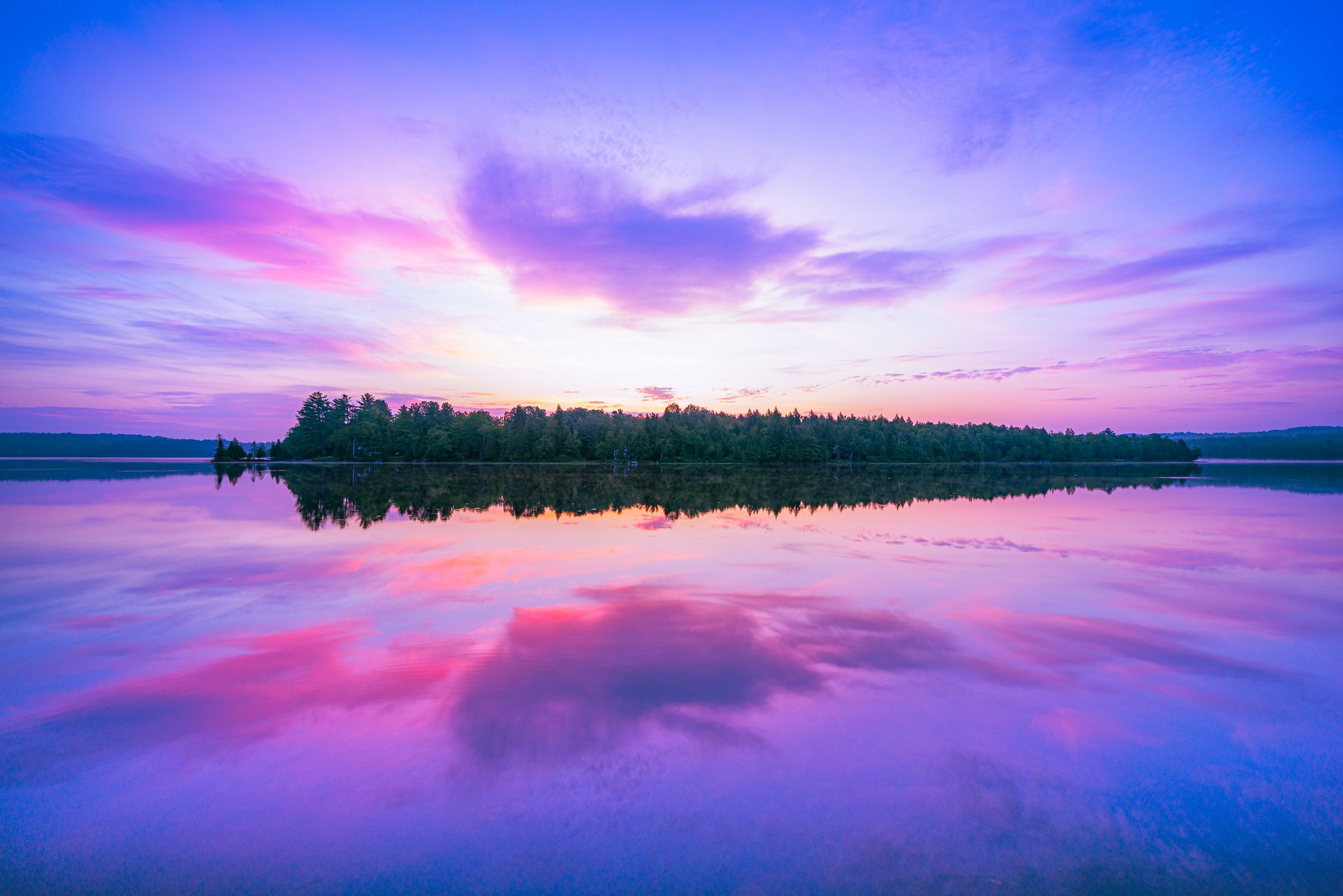
The first thing you notice at Dragonwood after dark is what's missing. No streetlights. No highway glow bleeding through the trees. No neighbors' porch lights. Just the pond reflecting whatever the sky decides to show you, and the loons calling back and forth across the water like they've been doing it longer than anyone's been listening.
On a clear night (and there are a lot of clear nights in Parkman, Maine), you can see the Milky Way from the Bunk House balcony without binoculars. One guest, Veena from New Jersey, came specifically to photograph it. She got the shot. She also spotted bald eagles from her kayak the next morning.
That kind of darkness, that kind of quiet, doesn't happen by accident. Dragonwood is a solar-powered Maine retreat. The entire property runs on a grid-tied solar system. And that choice shapes everything about what it feels like to be here.
What "Solar-Powered" Actually Means Here
People hear "solar-powered" and picture limited electricity and cold showers. That's not this.
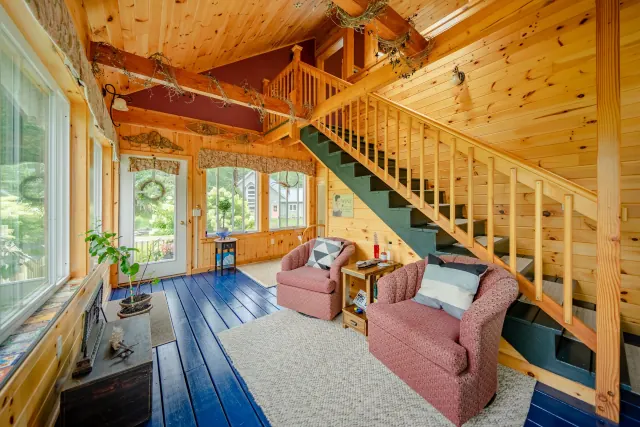
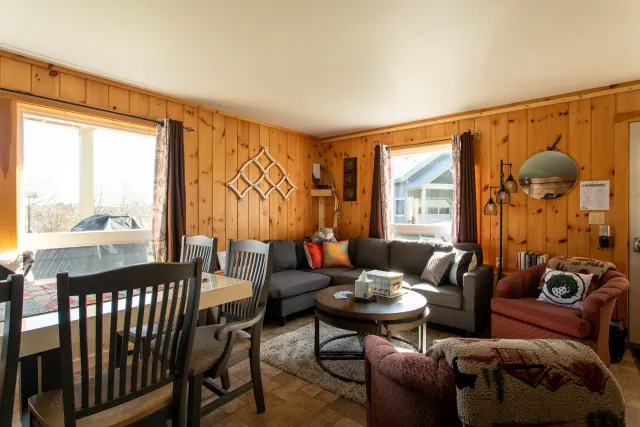
The lights work. The hot water works. The kitchen works. There's Starlink internet and Smart TVs in the rooms. You can charge your phone, brew coffee at 6 a.m., and stream a movie after the kids pass out.
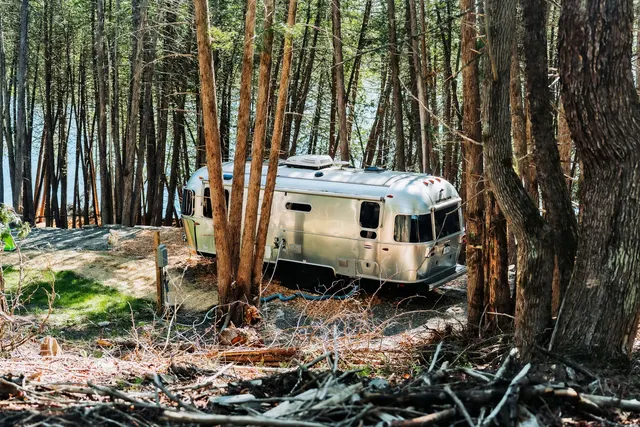
The difference is where the power comes from. The team buried roughly a quarter mile of cabling to connect a large solar field directly into the local electric grid — no utility poles, no overhead wires, nothing crossing the sky between you and the tree line. A backup generator handles the rare stretch when the local grid goes down. The Main House and Bunk House can be booked together, with a separate Airstream for couples available by request, and the solar system supports the property.
You won't notice the power source while you're here. You will notice what the power source makes possible: 18 acres and about 1,200 feet of private shoreline on Manhanock Pond, with no utility poles, no transformer boxes, and no buzz from overhead lines. Just trees, water, and whatever's moving through the woods tonight.
Why They Did It This Way
The decision wasn't to avoid the grid. It was to connect to it without tearing up the land to do it.
Conventional utility service would have meant poles and overhead lines through the property. Instead, the team buried about a quarter mile of cable to run the solar field's output directly into the local electric grid. No visible infrastructure. No wires breaking up the view of the sky.
The grid connection also means Dragonwood shares. When the sun is out and the property is quiet, surplus power flows back out to neighbors. The system was built to meet the property's needs and contribute the rest — which is the part most guests never hear about.
The backup generator is there for the rare times the local grid itself goes down. It can run all of Dragonwood. It just doesn't have many occasions to.
What Guests Actually Notice
Nobody shows up talking about solar panels. They leave talking about the sky.
Veena came from New Jersey and photographed the Milky Way from the dock. She didn't plan to see bald eagles from her kayak the next day, but Manhanock Pond has little development on its shores, so wildlife shows up on its own schedule.
The fire pit gets used almost every night. Guests sit out there after dinner and just look up. That sounds like a small thing until you realize most people haven't done it in years. In the suburbs, you see a dozen stars on a good night. Here, you lose count before you find a constellation.
The quiet is the other thing. Not silence. The loons are loud, the frogs are louder, and something is always rustling in the brush. No traffic. No neighbor's TV through the wall. The heat pumps cycle on and off now and then, but past that it's just the loons, the frogs, and whatever is moving through the brush. Your ears adjust after about an hour, and then you start hearing things you forgot existed.
Stargazing from the Bunk House balcony has become one of those things guests mention in almost every review. Nobody puts it on their itinerary. It just happens.
Built to Be Shared
Maine has other remote properties. Some are rustic to the point of no electricity. Some charge a thousand dollars a night for a polished version of rustic. Grid-tied solar and self-contained, with a Warrior Confidence Course and a Design Studio where guests draw, paint, and make crafts. Private waterfront on a pond big enough to paddle for hours without seeing another person. Gardens growing vegetables, berries, and herbs. And all of it running on sunlight.
As Carrie Reed, Dragonwood's Director of Operations, puts it: "We built Dragonwood to be shared, not just rented."
That's the part the solar makes possible. The property stays whole. The land stays undisturbed. The darkness stays dark. And guests get to walk into something that feels less like a rental and more like a place that was waiting for them.
Practical Details
- Location: 82 Tozier Road, Parkman, Maine
- Power: Grid-tied solar with backup generator
- Internet: Starlink satellite (fast enough for remote work and streaming)
- Lodging: Main House with private bedrooms; Bunk House sleeps 16; separate Airstream for couples by request
- Pond: Manhanock Pond, with about 1,200 feet of private shoreline at Dragonwood
- Property: 18 acres
Come See What It's Like
The best way to understand Dragonwood is to sit on the dock after sunset and watch the sky open up. No amount of photos or blog posts replicates that moment when you realize you can see more stars than you've seen since you were a kid.